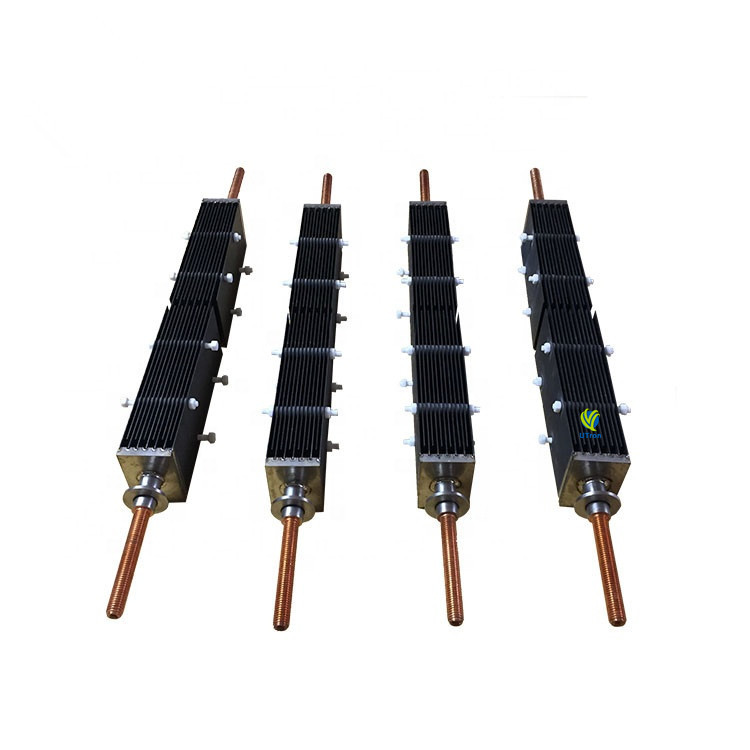
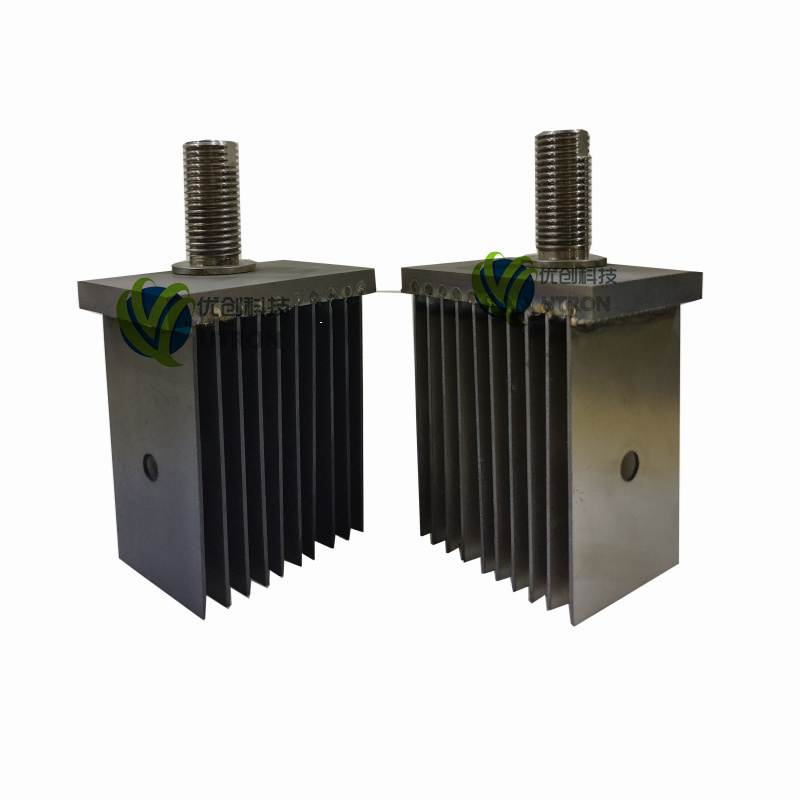
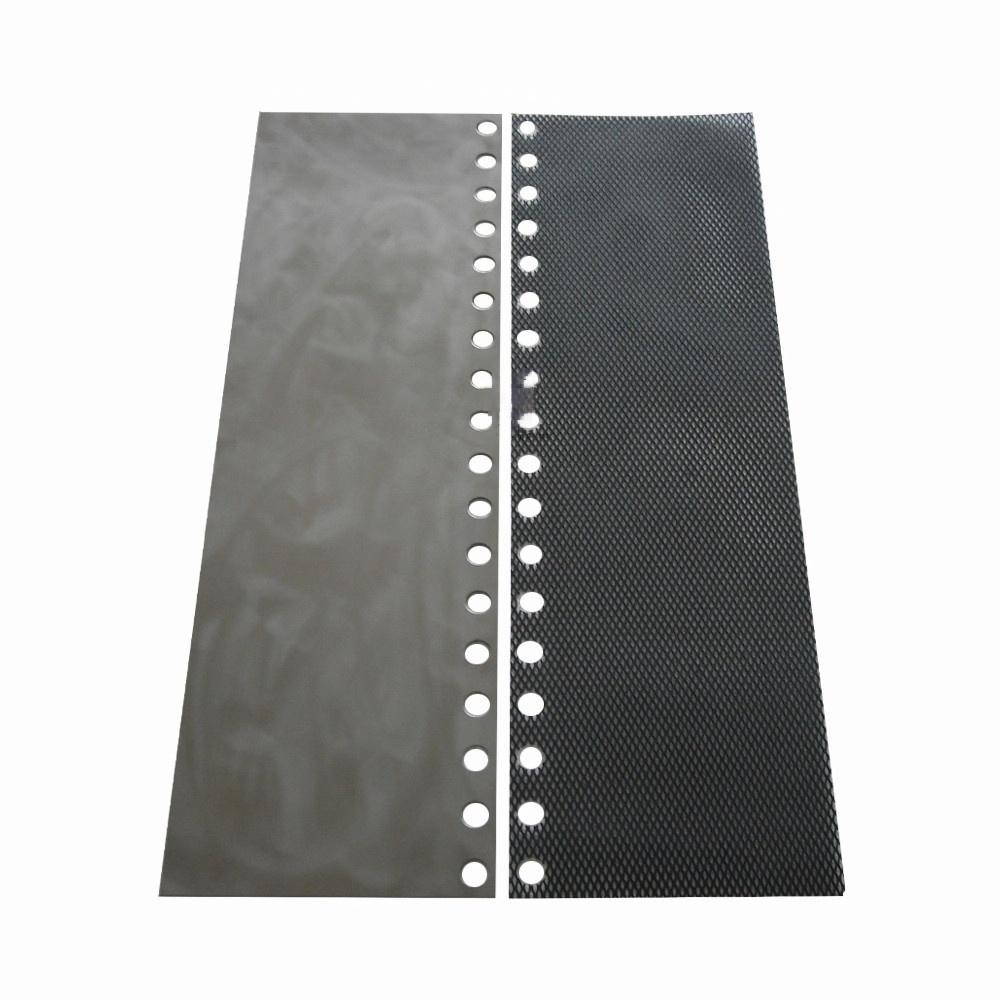
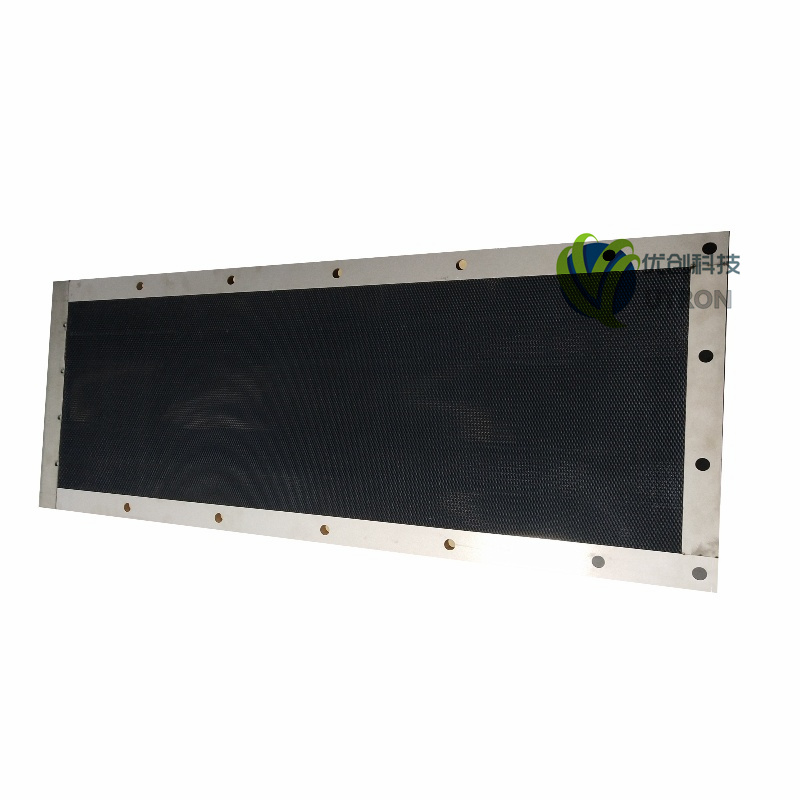
Parameters of Titanium Electrodes for Seawater Electro Chlorination:Substrate Material: Pure Titanium plate in Gr1/Gr2;Coating: ruthenium, iridium oxide coated (RuO + IrO); Shape: Plate or customize;Operating life: 2-7 Years;
| Anode Material | Chlorine Over potential
(mV) | Weight Loss from Anode
(kilograms/ton Chlorine) |
| Graphite | ≈ 400 | 2 - 3
|
| Platinum | ≈ 200 | 0.4 – 0.8
|
| RuO 2 – TiO 2 | ≈ 50 | < 0.03 |
AUE has developed series of Nano-scale multi-layer 6 elements mixed metal oxides coating, they includes Ruthenium, Iridium, Platinum, Titanium, Tantalum; Palladium. This coating improves the efficiency and performance over conventional ruthenium oxide coating by maximize electro catalytic activity and interactions of coating surface area. The electrode substrate material is Gr1 titanium, which provides excellent stability and corrosion prevention performance.
![]()
Features:
Multiple titanium anode /cathode plates;
Bi-polar & mono-polar plate designs;
Electrode replacement every 5 – 10 years depending on use and Salt & Water Quality.
Applications:
Power station seawater electrolysis;
Power plant biofouling control.
Bleach production plant.
Chlor-alkali industry