![]()
About AUE: MMO Coated Titanium Anode and Electrode Manufacturer
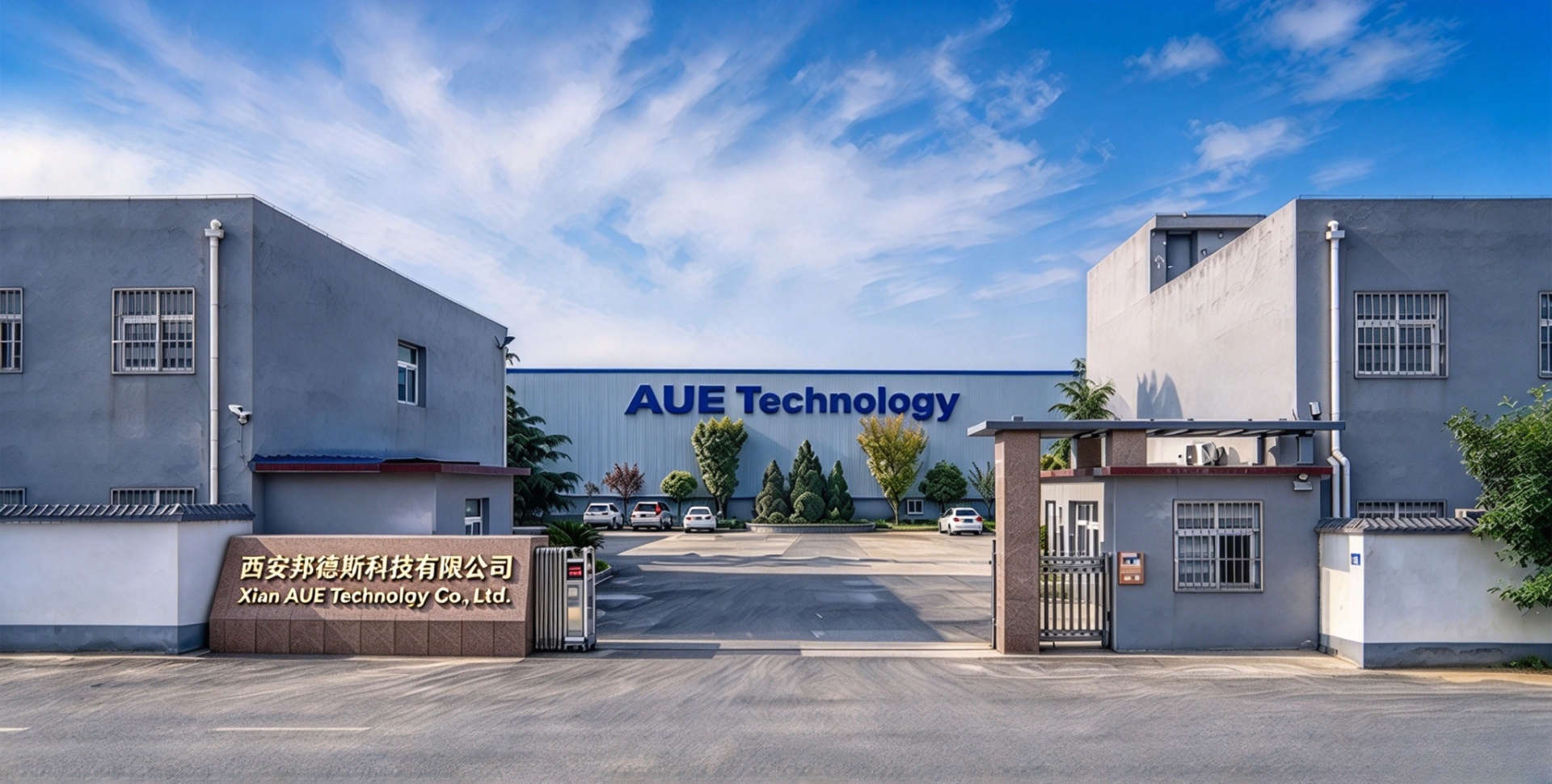
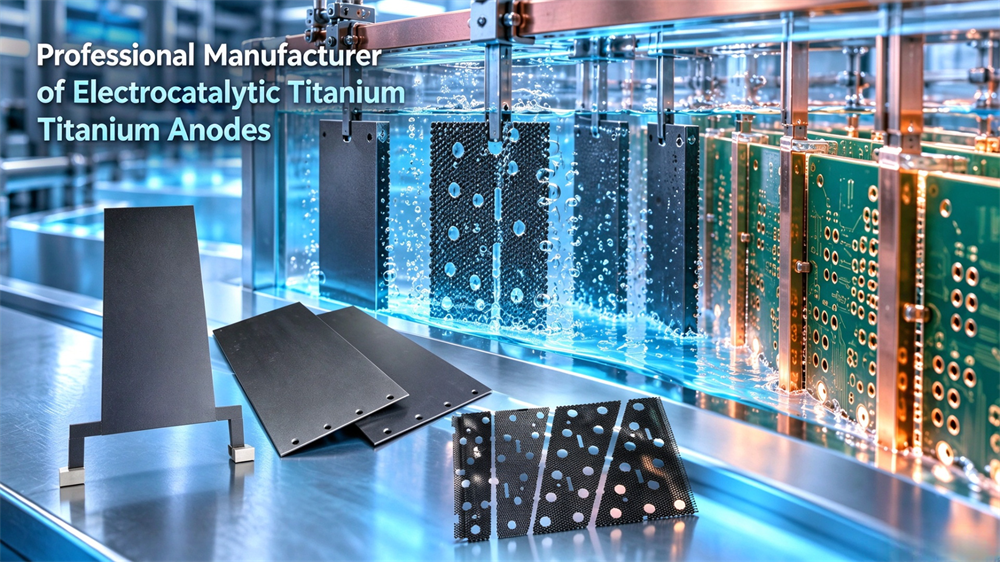
Xi'an AUE Technology Co., Ltd. (AUE) is a manufacturer of electrocatalytic titanium electrodes and electrochemical equipment, based in Xi'an, Shaanxi Province, China, with more than 21 years in electrode materials and ISO 9001 certification. We coat titanium substrates with ruthenium-iridium (Ru-Ir), iridium-tantalum (Ir-Ta), platinum or lead dioxide catalysts; build titanium electrolytic cells and on-site sodium hypochlorite generators around them; and re-coat retired anodes to extend their service life. Our electrodes run in wastewater treatment, seawater electrochlorination, electroplating, electrowinning, chlor-alkali, organic electrosynthesis, water electrolysis for hydrogen, and cathodic protection — supplied from a 20,000 m² plant to customers in more than 120 countries.
Key facts
| Item | Detail |
|---|
| Legal name | Xi'an AUE Technology Co., Ltd. |
| Business | Manufacturer — electrocatalytic electrode materials, electrochemical cells and accessories, on-site hypochlorite systems, non-ferrous metals and deep-processed products |
| Experience | More than 21 years in electrochemical electrode materials |
| Quality certification | ISO 9001 |
| Plant | 20,000 m² across multiple production lines for coating, sintering, cell assembly and metal fabrication |
| Head office | 19th Floor, Building 4, Taihua Jinmao International, High-tech Zone, Xi'an, Shaanxi, China |
| Factory | No. 1688 Hanhui Avenue, Qinhan New City, Xixian New Area, Shaanxi, China |
| Customers | More than 5,600 clients in over 120 countries |
| Core capability | Coating formulation, substrate preparation, cell design, and re-coating of service-retired titanium anodes |
What we manufacture
Our range divides into four groups: coated titanium electrodes, complete electrolytic cells and hypochlorite systems, titanium cell components, and re-coating services. Almost every item is made to the customer's drawing rather than to a stock size, because electrode geometry is set by the cell it has to fit inside.
| Group | Products | Typical use |
|---|
| Coated titanium electrodes | Ru-Ir coated titanium electrodes, Ir-Ta coated anode plate, platinized titanium electrodes, lead dioxide coated titanium anodes | Electrochlorination, wastewater oxidation, plating, electrowinning, hydrogen generation |
| Electrolytic cells and systems | On-site sodium hypochlorite generators, hypochlorite electrolyzers, tubular electrolyzers, swirl-electrolysis tubular cells, high-strength hypochlorite packages | Disinfection, cooling-water biofouling control, industrial wastewater |
| Titanium cell components | Plate and sheet, rod, mesh, tube, cathodes | Substrates, current collectors, cell bodies, cathodes |
| Services | Anode re-coating, custom cell design, coating selection, scale-up support | Life extension, retrofit, new process development |
The four coating systems, and when each one is correct
Coating chemistry is the whole engineering decision on a dimensionally stable anode. The substrate carries current and never dissolves; the coating decides which reaction happens, at what overpotential, and for how many ampere-hours. We run four systems, and the choice is driven by the anodic reaction the process produces — not by which coating is nominally "best".
| Coating | Catalytic reaction | Specify it for | What limits it |
|---|
| Ruthenium-iridium (RuO₂/IrO₂) | Chlorine evolution, with iridium added for oxygen tolerance | Seawater electrochlorination, sodium hypochlorite generation, chlor-alkali, swimming-pool salt cells, brine anti-fouling | Highest activity of the four, but ruthenium is the least stable under oxygen-evolution duty — service life shortens if the process runs oxygen-rich |
| Iridium-tantalum (IrO₂/Ta₂O₅) | Oxygen evolution, or mixed oxygen and chlorine | Wastewater oxidation, electrowinning, electroplating, cathodic protection, acidic service | Lower activity than Ru-Ir in chloride service; tantalum raises acid resistance and slows iridium dissolution at high potential |
| Platinum on titanium | Low-overpotential chlorine or oxygen evolution | Hard chrome plating, ionized-water electrolysis, hydrogen generation, anode rods and probes | Platinum loading drives cost; the coating is thin and sensitive to reverse current — the electrode must not be driven cathodic |
| Lead dioxide (PbO₂) on titanium | High-oxygen-overpotential oxidation | Refractory organic degradation, strong oxidising duty where Ru and Ir coatings are attacked | The highest oxygen overpotential in the range, but the coating contains lead — check restricted-substance and product-contact requirements before specifying it |
Selection note: the coating also has to match the current density and the electrolyte's chloride level, and those two inputs set the operating life. A coating chosen for activity alone will pass commissioning and fail early. We quote coatings against the customer's current density, chloride concentration, temperature and required service life, and state the coating loading in g/m² rather than quoting a nominal thickness — loading is the number that determines capacity, and thickness figures are not comparable between suppliers.
Electrolytic cells and on-site hypochlorite systems
An electrode that is correct on the bench can still fail in a cell, because the cell decides current distribution, flow regime, temperature rise and gas removal. That is why we build cells as well as electrodes, and why the two are designed together.
- On-site sodium hypochlorite generation. Electrolyzers and complete packages that produce hypochlorite from brine or seawater at the point of use, avoiding the transport and storage of concentrated chlorine. Used for drinking water and wastewater disinfection, cooling-tower and condenser biofouling control, and swimming pools.
- Tubular electrolyzers for wastewater. Concentric-tube cells, including swirl-electrolysis designs, that raise mass transfer and current efficiency for electrochemical oxidation of organics, ammonia and landfill leachate.
- Custom cell design. Where the process is new or the geometry is fixed by an existing plant, we design the electrode stack, connections and flow path around the customer's operating window, then build to that design.
Anode re-coating: extending the life of the substrate
The titanium substrate outlives its coating by a wide margin. When a coated anode reaches end of life, the failure is almost always coating loss at the operating current density — not damage to the titanium beneath it. Re-coating recovers that substrate instead of scrapping it.
- Inspection and acceptance — substrate thickness, straightness, surface condition and joint integrity are checked before anything is stripped. Substrate below tolerance is rejected rather than re-coated.
- Coating removal — the spent oxide layer is stripped chemically or mechanically back to sound titanium, then the surface is re-prepared for adhesion.
- Re-coating — the selected catalyst is applied in successive passes and thermally decomposed, with loading set for the required service life.
- Verification — adhesion and accelerated-life testing on coupons from the batch, so the returned anode carries the same test basis as a new one.
Re-coating is usually faster than new manufacture and costs materially less than a new electrode, which makes it the default route for large plate and tubular anodes in plating lines, electrochlorination cells and electrowinning circuits.
Where our electrodes are used
| Industry | Application | Electrode |
|---|
| Water and wastewater | Electrochemical oxidation, decolourisation, ammonia and COD removal, landfill leachate | Ir-Ta, IrO₂, RuO₂ oxidation electrodes |
| Electrochlorination and disinfection | Seawater chlorination, brine electrolysis, hypochlorite generation, pool salt cells | Ru-Ir coated titanium |
| Chlor-alkali | Chlorine and caustic production | Ru-Ir anodes |
| Electroplating | Copper plating, PCB plating, chromium plating, hard chrome | MMO and platinized anodes |
| Hydrometallurgy and electrowinning | Copper, zinc, nickel and cobalt electrowinning | Ir-Ta plate and cylindrical cell anodes |
| Copper and aluminium foil | Electrolytic foil production | Coated titanium anodes and cathodes |
| Organic electrosynthesis and electrophoresis | Electrochemical synthesis, electrodeposition coating | Ir-Ta and platinized anodes |
| Hydrogen and ionized water | Water electrolysis, alkaline and PEM cells, ionized-water generators | Platinum-plated titanium mesh, Ir-Ta |
| Cathodic protection | Impressed current groundbeds, tank bottoms, marine structures | MMO tubular, ribbon and wire anodes |
How we control quality
Coated electrodes fail for reasons that are invisible from the outside: insufficient coating loading, poor adhesion at the substrate interface, or contamination in the oxide layer. Our quality system is therefore built around testing the things that cannot be seen.
| Check | Method | What it proves |
|---|
| Substrate conformity | ASTM B338 Grade 1 or 2 for tube; ASTM B265 Grade 1 for sheet and mesh, with mill certificate | The titanium is the specified grade and chemistry, not a substitute |
| Coating loading | Mass of noble metal per unit of coated area, in g/m² | Capacity, and therefore service life, matches the quotation |
| Coating adhesion | 180° bend test over a defined mandrel; no spalling permitted | The oxide is bonded to the substrate rather than sitting on it |
| Accelerated life | NACE TM0108 for impressed current anodes; ISO 19097 for mixed metal oxide anodes in soils, waters and concrete | Service life is demonstrated under high current density before shipment |
| Coating integrity | X-ray inspection of the coated surface | No bare patches, skips or inclusions in the active layer |
| System certification | ISO 9001 | Process control is documented and auditable |
How we work with a project
- Process data first. Electrolyte composition, chloride level, pH, temperature, required current density, target service life, and the cell or tank geometry you have to fit.
- Coating and loading selection — we propose the catalyst system and the coating loading, and state the current-density basis behind the life figure.
- Design and drawing — electrode geometry, current collection, connection detail and, where relevant, the complete cell arrangement.
- Manufacture and test — coating, sintering, assembly, then adhesion and accelerated-life verification on the batch.
- After-sales support — installation guidance, commissioning checks, and re-coating when the coating reaches end of life.
Our technical team works in electrode materials rather than general sales, so a specification question gets an electrochemical answer. Send drawings, a process description or a failed anode for evaluation and we will return a proposal with the coating, loading and life basis stated — contact us to start, or read the FAQ for standard specification questions.
FAQ
Who is AUE, and what does the company make?
Xi'an AUE Technology Co., Ltd. is a manufacturer of electrocatalytic titanium electrodes and electrochemical equipment based in Xi'an, Shaanxi Province, China. We produce Ru-Ir, Ir-Ta, platinized and lead dioxide coated titanium anodes, titanium electrolytic cells and on-site sodium hypochlorite systems, titanium cell components, and we re-coat service-retired anodes. The company has more than 21 years of experience and ISO 9001 certification.
What is the difference between Ru-Ir and Ir-Ta coating?
Ru-Ir is optimised for chlorine evolution and is the right coating for seawater electrochlorination, hypochlorite generation and chlor-alkali duty. Ir-Ta is optimised for oxygen evolution or mixed oxygen-chlorine service and is the more durable general-purpose coating for wastewater oxidation, electrowinning, plating and cathodic protection in acidic or high-chloride environments. Choosing by activity alone is how anodes fail early.
Can you re-coat titanium anodes that are already in service?
Yes, provided the titanium substrate is still within tolerance. We inspect and accept or reject the substrate, strip the spent coating, re-prepare the surface, apply a new coating at the loading required for the next service life, and verify the batch by adhesion and accelerated-life testing. Re-coating costs materially less than new manufacture and usually has a shorter lead time.
Do you supply electrodes only, or complete cells and systems?
Both. We supply coated electrodes to a customer's drawing, and we design and build complete electrolytic cells and on-site hypochlorite generator packages — including tubular and swirl-electrolysis cells for wastewater. Because the electrode and the cell interact, projects that involve both are designed together.
What titanium substrate do you use?
ASTM B338 Grade 1 or Grade 2 titanium for tubular anodes, and ASTM B265 Grade 1 for plate, sheet and mesh, each supplied with a mill certificate. Grade 1 is the default for coated anodes because its lower alloy content gives more consistent coating adhesion.
How is the coating loading specified?
In grams of noble metal per square metre of coated area, not in micrometres. Loading is what determines the charge capacity available for the design life, and thickness figures are not comparable between suppliers because they include different intermediate layers. We quote loading and the accelerated-life basis together.
How long does a coated titanium anode last?
It depends on the coating system, the loading, the current density and the electrolyte — which is why a life figure without those four inputs is not a specification. The defensible approach is to state the design current density and the accelerated-life result, then divide coating capacity by the charge the anode will pass per year. We provide that calculation with every quotation.
Which industries do you serve?
Water and wastewater treatment, electrochlorination and disinfection, chlor-alkali, industrial electroplating and PCB plating, hydrometallurgy and electrowinning, electrolytic copper and aluminium foil, organic electrosynthesis and electrophoresis, hydrogen production and ionized water, and cathodic protection. Customers are in more than 120 countries.
Contact
Xi'an AUE Technology Co., Ltd.
19th Floor, Building 4, Taihua Jinmao International, High-tech Zone, Xi'an, Shaanxi, China
Factory: No. 1688 Hanhui Avenue, Qinhan New City, Xixian New Area, Shaanxi, China
Email: Bart@anodeae.com | Phone: +86 188 2169 2388
Technical enquiries are answered by engineers; send process data or drawings and we will respond with a coating recommendation and the life basis behind it. Contact form